




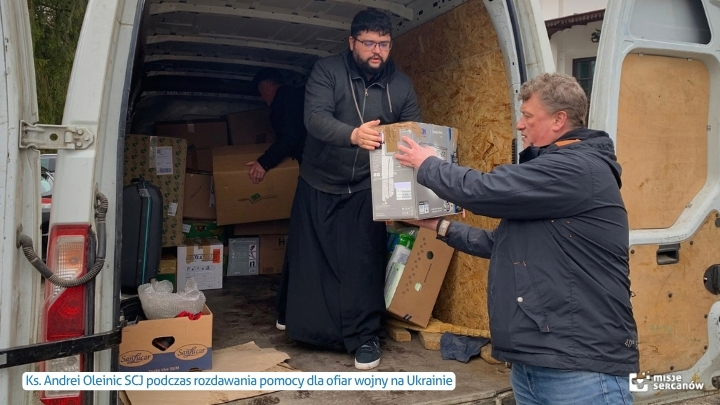
The war has made the line between pastoral ministry and humanitarian aid practically disappear. When someone comes to you without money for food, medicine, or heating, the first response is not a theological discussion, but practical help, writes Fr. Andrei Oleinic, SCJ.
The Dehonian Fathers serve in communities across Ukraine where Catholics make up between 10 and 40 percent of the population. Their ministry includes, above all, celebrating Holy Mass and administering the sacraments; preaching homilies and giving catechesis; preparing children and young people to receive the sacraments; visiting the sick, the elderly, and those who are lonely; conducting funerals and praying for the deceased; offering spiritual guidance and accompanying people suffering from the trauma of war; supporting families facing financial hardship; organizing and distributing humanitarian aid; assisting people displaced from areas most severely affected by the war; organizing activities and gatherings for children, as well as summer camps; and cooperating with other parishes, charitable organizations, and the local Church.
The war has made the line between pastoral ministry and humanitarian aid practically disappear. When someone comes to us without the money to buy food, medicine, or heating, the first response is not a theological discussion but practical help. Only then can we sit down, talk, pray, and ask how that person is really feeling.
That is why, during wartime, a priest's presence simply means being there for people – even when things are difficult, when air raid alerts sound, when shelling occurs, when there is no electricity, or when people fear for their loved ones. This understanding of ministry also reflects the charism of the congregation. From the very beginning, the Dehonian Fathers have combined proclaiming the Gospel with caring for people and responding to their concrete needs. During the war, this mission has become particularly visible.
The war has changed virtually every aspect of life in Ukraine. It is not just a matter of destroyed buildings. A certain sense of normality has been shattered.
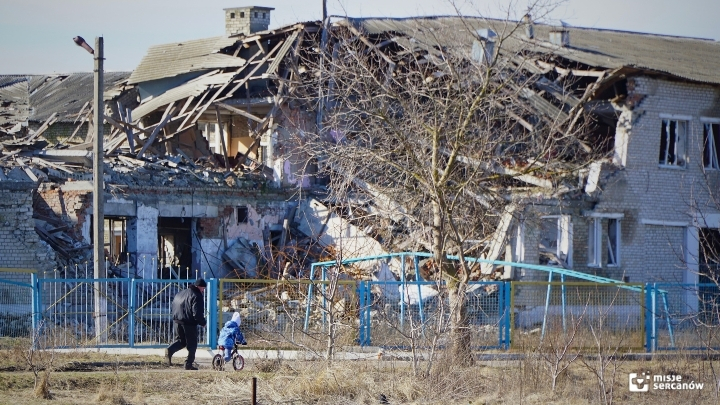
Of course, the direct effects of the war are visible in many places: houses and apartments, schools, hospitals, workplaces, shops, roads, power grids, and other infrastructure have been destroyed or damaged. At the same time, the extent of the destruction varies greatly from one region to another. In some towns and villages, everyday life remains relatively normal, while in others, the war is a part of daily life. Attacks on energy infrastructure are particularly devastating, resulting in disruptions to electricity, heating, water, and internet services.
Above all, however, people have stopped taking their safety for granted. Before the war, people made plans for months or even years ahead. Today, many live within a much shorter time frame: until tomorrow, until next week, until their next meeting with a loved one. Everyday life now includes things that most people rarely had to consider before: air raid alerts, bomb shelters, the threat of shelling, drones and missiles, power cuts, heating problems, the need to keep supplies of food and water, constant concern for family members, news of people being wounded or killed, mobilization and military service, living apart from family members, psychological distress and trauma, and uncertainty about the future.
The hardest part is that the war does not end inside a person when an air raid alert is over. Someone may be sitting quietly at home while waiting for a phone call from their son at the front. A mother may wonder every day whether her child will return home. A wife may spend months living without her husband. A child may go to school but still be frightened by every unusually loud sound. That is why war is not just a matter of physical safety. It is also an immense psychological and spiritual ordeal.
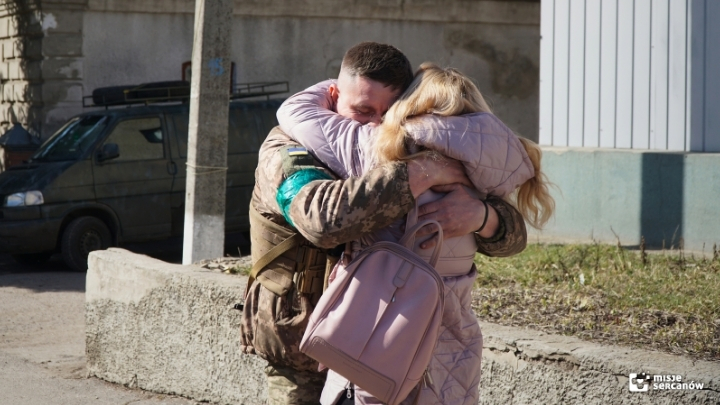
The war has triggered massive population movements. Millions of Ukrainians have left their homes. Some have fled abroad, while others have relocated to safer regions of the country. In pastoral ministry, however, what matters even more than the statistics is who has stayed behind. In many communities, the absence of men is deeply felt. Many are serving in the military. Some have been killed, others have been wounded, and still others have returned from the front with serious physical and psychological consequences. As a result, there are families in which a father, husband, or son is absent for long periods of time.
At the same time, some communities have welcomed internally displaced people. These are people who have lost their homes or been forced to leave areas directly affected by the fighting. The Dehonian Fathers encounter such people in their parishes and communities as well. For them, the Church becomes not only a place of prayer but also a first point of contact, a source of assistance, and a place where they can find a sense of belonging.
Before the war, the rhythm of our lives was shaped primarily by the liturgical calendar and the regular activities of parish life. Today, a priest must also be a pastoral caregiver, a relief coordinator, a driver, someone who visits the sick and the elderly, and a person who knows how to listen to a mother in tears or the wife of a soldier. Sometimes, we have to take aid to places where conditions are difficult. Sometimes, we need to deliver food, medicine, and other essential supplies. And sometimes, we have to visit a family that has just received news of the death of a loved one.
Today, more than ever, homilies are not simply about reflecting on the day's Gospel reading. They also address forgiveness, hope, suffering, death, fear, the meaning of life, and REPARATION.
People ask, “Why does God allow this to happen?”, “Why was my son killed?”, “How am I supposed to live when my husband is at the front?” These are questions that cannot be answered in a single sentence. That is why a priest must, above all, be present. Sometimes, the most important form of pastoral care does not involve saying much at all, but simply sitting beside someone who is crying.
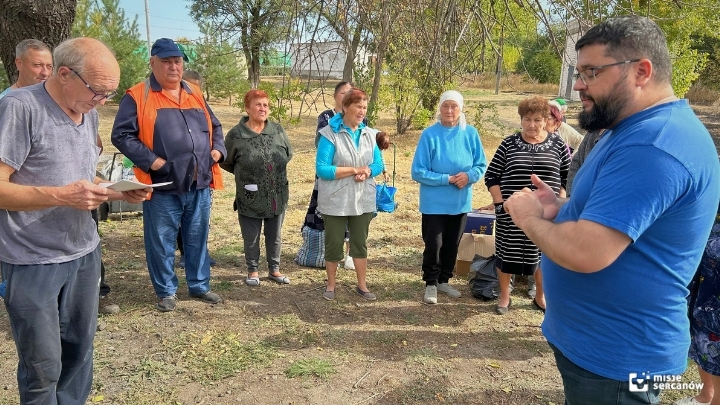
Solidarity has become one of the most moving experiences of this time. The war has revealed people's tremendous capacity to help one another. They share food, clothing, medicine, money, and their time. They help their neighbors, the elderly, soldiers' families, and displaced people. In many places, volunteers, parishes, groups of women and young people, and individuals are organizing aid efforts.
There is also a strong spirit of solidarity among priests and parishes. When one parish receives a larger amount of aid, it tries to share it with others. When someone learns that a particular family lacks food, medicine, or fuel for heating, they try to find a way to help. During wartime, it becomes especially clear that the Church is not just a building. The Church is made up of people who know how to stand together in times of suffering.
Every family experiences the war differently, but several recurring challenges can be identified. One of the greatest is family separation. Men are at the front, women often raise their children alone, and parents worry about their sons. In some families, the war means spending months or even years without one of the people closest to them.
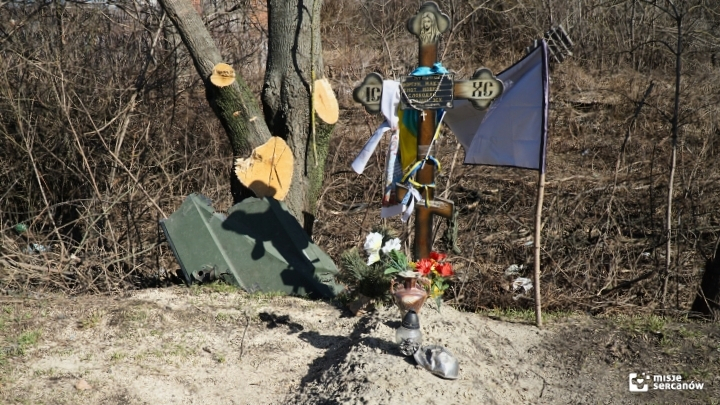
There are families in our parishes who have lost loved ones. There are also people who have returned from the war wounded, disabled, or carrying the heavy burden of traumatic experiences. Priests encounter these situations frequently during funerals, pastoral visits, and conversations with families.
The war also means losing one's job, home, or source of income. The situation is particularly difficult for older people, single mothers, large families, and those who have been forced to flee their homes.
Children are especially vulnerable to the experience of war. A child may not understand politics or military operations, but they understand perfectly well that their father has not come home, that their mother is crying, or that they have to go down to a shelter during the night. That is why, as Dehonian Fathers, we are deeply committed to helping children and young people affected by the trauma of war. By organizing gatherings, activities, trips, communal prayer, and play, we try to give them at least a little sense of normality.
Many people have also sought refuge in safer areas after losing their homes or being forced to leave their communities. They do not always have jobs, their own accommodation, or loved ones who can help them. The Church strives to support these families as well. In western Ukraine, the Archdiocese of Ivano-Frankivsk is one example of a Church community providing assistance to thousands of internally displaced people. The Dehonian Fathers are also involved in these relief efforts.
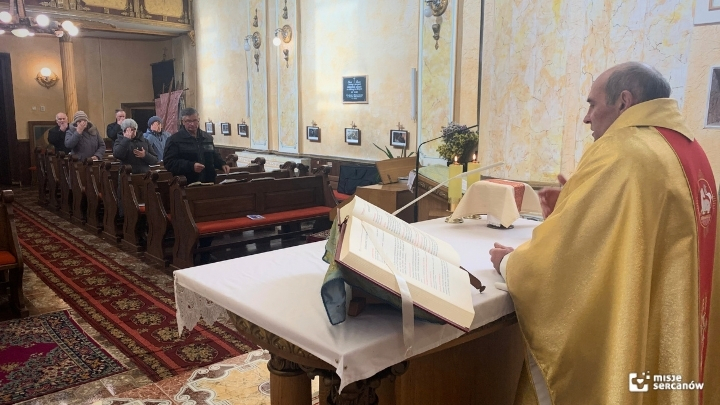
Today, what people expect from priests above all is their presence. They do not expect us to solve all of Ukraine's problems. We cannot end the war or rebuild every home. But we can be there for people. And that is precisely what they need so much. People want to know that the Church is praying for their families, for soldiers, for the wounded, for those who have fallen, for children, and for peace. For many, prayer is something very tangible. It gives them a sense that they are not alone. During wartime, people need the Eucharist, the Sacrament of Reconciliation, the Anointing of the Sick, and the opportunity to speak with a priest more than ever. Especially at critical moments – during illness, death, funerals, or separation – the presence of a priest is enormously important.
The war has also created very concrete needs. These include food, medicine, hygiene supplies, and fuel for heating, as well as assistance for large families, older people, and displaced persons, support for children, and help for the wounded and people with disabilities. Rebuilding places that have been destroyed also remains an important task. That is why material assistance today is also a form of pastoral ministry.
Hope. Perhaps that is what matters most of all. This is not about cheap optimism. We cannot simply tell someone who is suffering, “Everything will be all right.” Christian hope is something much deeper. It means believing that even in the midst of suffering, a person is not alone, that God never abandons us, and that evil and death do not have the final word. That is why a priest's mission is to help people get through this difficult time together with Christ.
The war has changed Ukraine, but it has also changed the way we understand the priesthood and the Church's presence among people. Before the war, a parish could be seen primarily as a place where people come for Holy Mass, confession, catechesis, or other religious services. Today, a parish must also be a place where people can find help, safety, community, and, above all, hope. That is why, for us, the Priests of the Sacred Heart of Jesus, the most important thing is not to abandon people to face their struggles alone. We see this as a particular expression of our charism today: being close to people and showing them the love of the Heart of Jesus not only through words but, above all, through our presence and concrete actions.
We do not know when the war will end. What we do know is that its consequences will continue long after the fighting has stopped. It will not only be homes, schools, and churches that need rebuilding, but also hearts, families, and society as a whole. That is why our presence in Ukraine is needed not only today but tomorrow as well – as people rebuild, seek reconciliation, heal their wounds, and regain hope.
Fr. Andrei Oleinic, SCJ
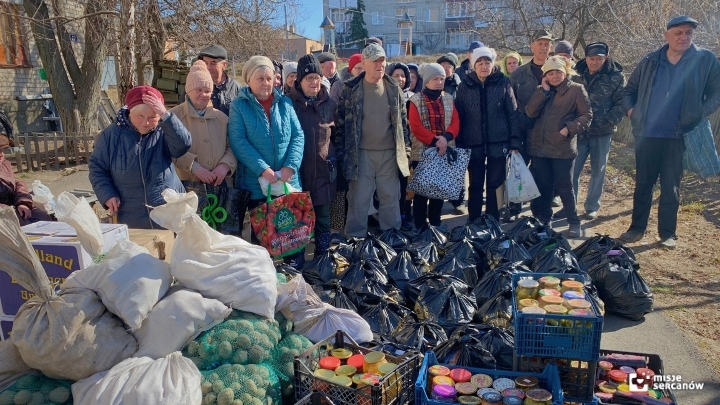
We would like to thank all the donors, volunteers, and friends of the Dehonian Missions. Thanks to your generosity and trust, for more than four years we have been working together to support those who have remained in Ukraine and face the daily hardships of the ongoing war. We are able to respond to the specific needs reported by our missionaries in Ukraine thanks to funds raised through our project, “Donation for missions where it is most needed.”


